Reading time: 10 minutes
Laurence Bossion's Diary, Chapter 14
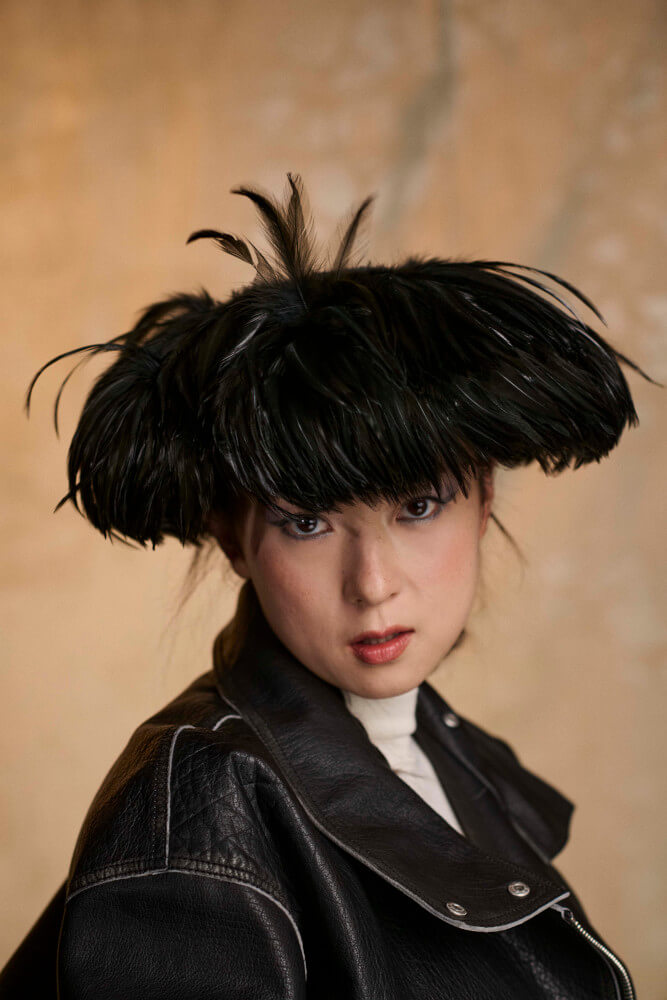
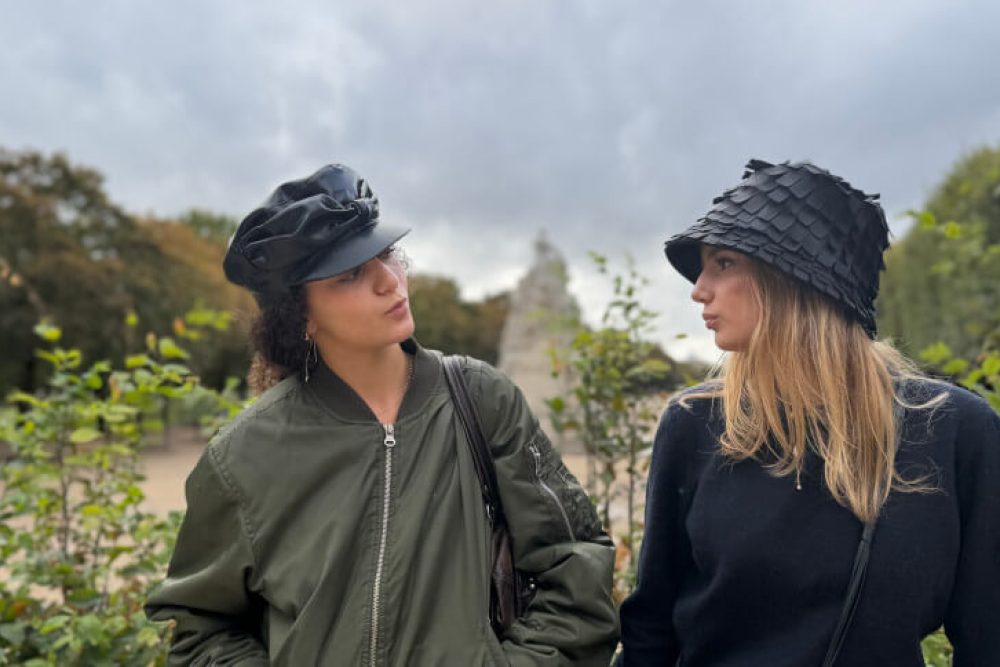
In September, fashion becomes a matter of state—except that it’s governed by coats, negotiated through hats, and often decided with a single glance. It’s the month when fashion shows come one after another in New York, London, Milan, and Paris, while magazines release their major back-to-school issues. So we’ve chosen to look at Laurence Bossion’s collections from this perspective: one of sophistication, precise detailing, and a contemporary take on timeless classics. We’ve also included a few fashion highlights from Laurence Bossion, not to mention the look to adopt for the Prix de l’Arc de Triomphe. All of this, in short, is what allows you to step into fall with elegance and, if possible, without looking like you’ve put too much thought into it.
Fashion in Three Hats
The Couture-Style Bucket Hat
Long associated with rain, festivals, and street culture, the bucket hat is now one of the most modern hats around. At Laurence Bossion, it takes on a new look without losing its edginess: trimmed with faux fur, crafted from luxurious materials and deep colors, it becomes a true luxury accessory. The collection, inspired by the Tibetan highlands, features it in shades such as golden yellow, burgundy red, and black—colors that instantly add depth to a winter look. Worn with a long coat, a beautiful knit, or a men’s suit that’s a bit boyish and slightly oversized, it remains cool while gaining a very couture sophistication. It is precisely this contrast that gives it its charm: a simple, almost nonchalant shape, crafted with the care and richness of a designer hat. This winter, wear it as often as you like.
The Tibetan beanie, a winter headwear style inspired by extreme cold
Somewhere between a beanie and a hat, Laurence Bossion offers a hybrid headpiece that’s lighter and less bulky than a chapka. Inspired by the landscapes and clothing traditions of high-altitude regions, she draws on the concept of protection without directly replicating the original style. Its cocoon-like shape gracefully frames the face and ears. Two long drawstrings hang down on either side and drape loosely around the neck, adding movement and creating a very graphic silhouette. Trimmed with faux fur for the coldest days, or available in a lighter version, it provides protection without weighing down the silhouette. Paired with a long coat or a monochromatic outfit, it becomes an accessory in its own right: functional, unique, and very sophisticated.
The black leather beret
The bibi is, by definition, a very chic little hat, almost “bon chic bon genre.” In black leather, it takes on a whole new vibe. In Laurence Bossion’s collection, this material lends a demure shape something bolder, more sensual, and decidedly Parisian. Worn with an impeccable coat, a suit, a turtleneck, or a very understated dress, it’s all it takes to give the entire look some character. It brings to mind the world of Helmut Newton: black, leather, precision, and bourgeois elegance slightly unsettled by a sexier edge. It’s exactly this contrast that makes the black leather bibi work. Small, precise, and easy to wear, it remains sophisticated without ever becoming pretentious. A perfect accessory for those who love the Parisian chic of the Palace era, but with a touch of Grace Jones-style audacity.
Arc de Triomphe Prize: What if we played it like a queen?
On the first Sunday in October, Paris hosts one of its most elegant events: the Prix de l’Arc de Triomphe. Established in 1920, this 2,400-meter race brings together some of the world’s finest thoroughbreds at Longchamp. In 2026, the Arc weekend will take place on Saturday, October 3, and Sunday, October 4, with the feature race scheduled for Sunday, October 4. For over a century, Longchamp has been a blend of sport, high society, and a flair for style. And since people don’t go to the Arc just to watch the horses, one essential question remains: what to wear on your head? In the fall, Laurence Bossion advises starting not with the hat, but with the coat. The Parisian weather in October may require you to keep it on all day; it’s therefore best to build your outfit around it. Royal families have known this for a long time: queens and princesses readily coordinate their coats and headwear within the same color palette, creating an instantly cohesive look, even when the dress is hidden beneath the outerwear. So choose your coat first—navy, camel, bottle green, burgundy, pearl gray, or black—then come to Laurence’s with it, or at least with a true-to-color photograph of it. She’ll be able to design the fascinator or hat that complements your silhouette without overwhelming it: tone-on-tone for a surefire elegance, a similar shade for added subtlety, or a precise contrast for those who prefer a bit more flair. For this season, felt is the natural choice: better suited to cold and damp weather than straw or a very delicate material, it also allows for beautiful volume and maintains an impeccable presence. At L’Arc, a well-chosen hat is anything but a costume: it should give the impression that the coat, face, and headwear were always meant to be worn together.
Laurence Memories: A Milliner and Fashion
Laurence Bossion tells us how fashion—the real thing, the grand kind, that of haute couture and fashion shows—can leave an indelible mark on a creative mind, and particularly on her own, as a milliner and artisan.
“Back then, I was a student at the Chambre Syndicale de la Couture in Paris, and I also worked as a dresser at fashion shows. It was very different from today: there were few models, they took their time, walked slowly, stopped in front of the photographers, posed, and smiled. And backstage, the contrast was striking: we had to dress them as quickly as possible because the models had multiple appearances during the same show. In the showroom, none of that was apparent to the clients and journalists. Only they really had the time to look at the garment, the proportions, the fabrics—the way a chiffon moved or how a heavier fabric draped on the body. The fashion show was almost like a presentation, with a much more ceremonial feel to it.”
One day, I picked up a rotary-dial phone (laughs) and called Jean Patou. I simply said I was a student at the Chambre Syndicale and asked if I could attend a private presentation of the collection. They said yes. Things were also simpler back then: the fashion houses knew that students could become interns and go on to work for them later, and there was this idea of bringing young people into that world.
So I went to Patou, and there, I got a bit of a shock. In *Vogue*, you saw a silhouette, a photo, a look. But in real life, everything was different. You could almost feel the models’ excitement, the energy of the fabrics, the emotion of the people around, and above all, the surprise. Christian Lacroix was already creating absolutely wild combinations at Patou: very fine muslins paired with rougher tartan, luxurious fabrics combined with fur, and colors that, on paper, should never have worked together. It was a constant clash of styles, yet it all came together perfectly.
I also remember Marie Seznec, looking stunning with her white hair, and those highly structured hairstyles, almost like hats. There was something 18th-century about them, something from the 1960s, and something very modern as well. Yet another clash of eras.
And I think that really stuck with me. Not as a specific image to reproduce, but as a sense of freedom: the idea that you can bring together things that, at first glance, don’t go together—materials, colors, volumes, references. For me, having become a milliner, that day at Patou really made a difference. There are things you see just once that almost end up becoming part of your visual vocabulary as a designer.”